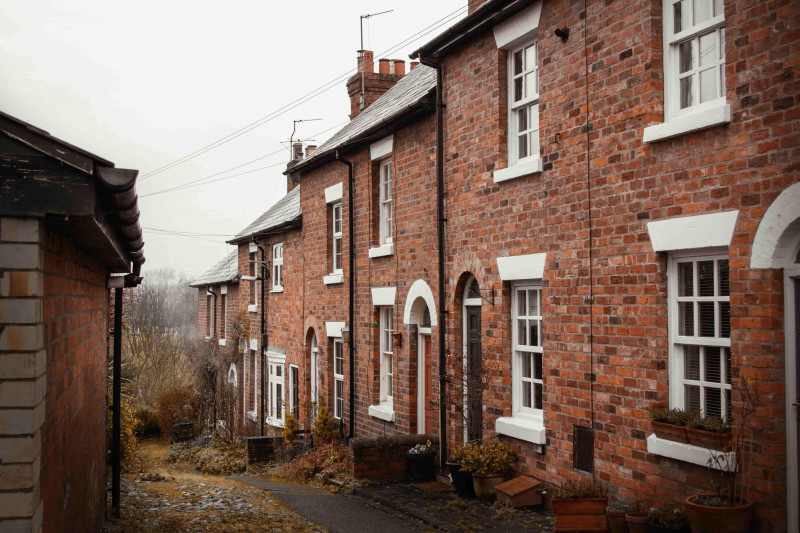
As we move through the summer of 2026, the landscape of British home heating is shifting beneath our feet. The government’s Clean Heat Market Mechanism and the evolving Future Homes Standard have moved from distant policy discussions to daily realities for homeowners in West Yorkshire. For those living in our region’s iconic stone terraces—from the steep streets of Hebden Bridge to the industrial rows of Armley—the question of sustainability is no longer theoretical. It is a matter of property value, comfort, and heritage.
The central tension of this transition is clear: how do we integrate 21st-century Air Source Heat Pump (ASHP) technology into 19th-century architecture?
Understanding the Mechanism
To understand the challenge, one must first understand the technology. Unlike a traditional gas boiler, which generates intense heat by burning fuel, a heat pump acts more like a refrigerator in reverse. It extracts ambient heat from the outside air—even in the brisk Yorkshire winter—and compresses it to warm your home.
Because heat pumps operate at lower flow temperatures than gas boilers (typically $35°C$ to $55°C$ compared to a boiler’s $70°C$), they require a home to be exceptionally efficient at retaining heat. This is where the specific "Yorkshire Stone" factor comes into play.
The Challenge of the Solid Wall
Most Victorian and Edwardian terraces in West Yorkshire are constructed of solid gritstone or sandstone. Unlike modern homes built with cavity walls that can be easily injected with insulation, these solid walls are "breathable." They absorb moisture and release it.
If you install a powerful heat pump without addressing the thermal envelope of a stone terrace, the pump will work overtime, leading to high electricity bills and a home that never quite feels "cosy." To make your terrace "Heat Pump Ready," we must look at a fabric-first approach.
Steps to Preparing Your Terrace
1. Thermal Efficiency and Insulation
The priority for any terrace owner should be the loft and the floors. While internal wall insulation (IWI) is an option, it can be costly and reduces room dimensions. However, ensuring you have at least 270mm of high-quality loft insulation and addressing draughty floorboards can significantly lower the heat demand of the property.
2. The Radiator Revolution
Because the water running through your system will be cooler, the surface area of your emitters (radiators) often needs to increase. In many West Yorkshire renovations, we are seeing a move toward "oversized" period-style column radiators. These maintain the aesthetic integrity of a terrace while providing the necessary surface area to warm a room effectively at lower temperatures.
3. Micro-Siting and Planning
In the dense rows of terraced housing, space is a premium. Finding a location for the external fan unit requires thought. It needs airflow and must adhere to Permitted Development rights regarding noise and distance from a neighbour’s window. In 2026, units have become significantly quieter and more compact, but "micro-siting" remains a key part of the valuation process. A poorly placed unit can affect "kerb appeal," while a cleverly integrated one can signal a modern, high-value home.
The Impact on Property Value
From an estate agent’s perspective, the "Green Premium" is becoming more pronounced. In 2026, buyers are increasingly wary of "stranded assets"—homes that will require expensive retrofitting in the near future.
A Yorkshire terrace that has already undergone the transition—boasting an EPC rating of B or C and a fully commissioned heat pump—commands a higher price point. It offers the buyer peace of mind, lower long-term energy costs, and protection against the eventual phase-out of gas boilers. We are finding that "Heat Pump Ready" is now a powerful search term for young professionals and families looking in areas like Saltaire and Chapel Allerton.
Preserving Our Heritage
There is a common misconception that heat pumps and heritage are incompatible. On the contrary, by upgrading our stone terraces to be compatible with renewable energy, we are ensuring their survival for another century. A damp, cold stone house is a house that degrades; a warm, dry, and ventilated stone house is a house that lasts.
Conclusion
Is your Yorkshire stone terrace ready? For many, the answer is "not quite yet." However, the transition is a journey, not a single event. By starting with draught-proofing, upgrading windows to heritage-style double glazing, and assessing your radiator sizes now, you are laying the groundwork for a more sustainable and valuable home.
In the West Yorkshire market of 2026, the most desirable homes are those that respect their industrial past while embracing a carbon-neutral future. The heat pump is not just a piece of hardware; it is an investment in the longevity of our region's unique architectural soul.