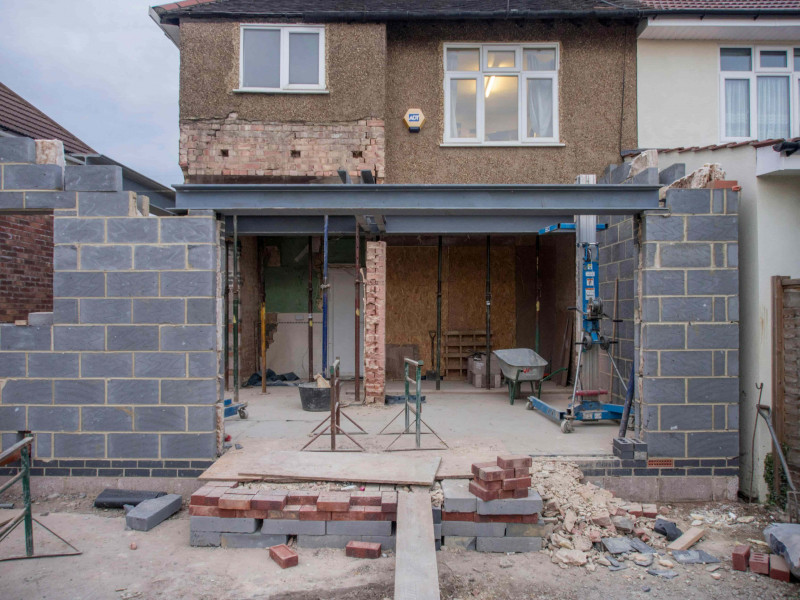
In 2026, the rules for extending your home in West Yorkshire have become more streamlined, but they are also stricter on environmental and neighbor-impact standards. If you are planning an extension this April, you likely fall into one of three categories: Permitted Development, Prior Approval, or Full Planning Permission.
Here is the professional breakdown for the major West Yorkshire councils (Leeds, Bradford, Kirklees, Calderdale, and Wakefield) to help you decide your next move.
1. The "Permitted Development" (PD) Route
For most West Yorkshire homeowners, this is the "default yes." If your project stays within these limits, you do not need full planning permission.
Projection Limits: * Terraced/Semi-detached: Up to 3 metres from the original rear wall.
Detached: Up to 4 metres from the original rear wall.
Height: Max overall height of 4 metres (or 3 metres if within 2 metres of your boundary).
Materials: Must be "similar in appearance" to the existing house (crucial for our local stone and brick aesthetics).
Land Use: The extension (plus any existing sheds/outbuildings) must not cover more than 50% of the land around the original house.
2. The "Prior Approval" (Larger Home Extension) Route
If you want to go bigger without the "Full Planning" headache, you can use the Larger Home Extension Scheme. This is a halfway house that involves a "neighbour consultation" by the council.
The 2026 Limits: * Terraced/Semi-detached: Up to 6 metres.
Detached: Up to 8 metres.
The Process: You notify the council (e.g., Leeds or Bradford Planning Portal), and they inform your immediate neighbours. If no one objects, you usually get the "Prior Approval" to proceed. If there are objections, the council will assess if the impact on "residential amenity" (overshadowing or privacy) is too great.
3. When You Always Need Full Planning Permission
Even in 2026, certain "constraints" in West Yorkshire will override your Permitted Development rights:
Conservation Areas: If you live in Saltaire, Chapel Allerton, or parts of Hebden Bridge, PD rights are often restricted (via "Article 4 Directions").
Listed Buildings: Any work to a listed property—internal or external—requires Listed Building Consent.
Side Extensions: While rear extensions have some PD leeway, most side extensions (especially two-storey ones) require full planning.
New-Build Estates: Many estates built after 2010 have their PD rights removed to maintain the "look" of the development. Check your original purchase deeds.
The 2026 "West Yorks" Local Variances
| Council Area | Key 2026 Focus | Advice |
| Leeds | HMO Article 4 | PD rights for conversions are restricted in student/high-density areas. |
| Bradford | Design Codes | New 2026 design codes emphasize "stone-matching" for Saltaire and rural fringes. |
| Kirklees | Coal Risk | Many extensions require a "Coal Mining Risk Assessment" during the planning phase. |
| Wakefield | 2026 Design SPD | A new "Supplementary Planning Document" focuses on high-quality, sustainable design. |
| Calderdale | Flood Resilience | Extensions in "Flood Zone 3" require specific flood-risk mitigation plans. |
Strategic Advice: The "Lawful Development Certificate"
Even if you are 100% sure your extension is "Permitted Development," in 2026 we strongly recommend applying for a Lawful Development Certificate (LDC).
Why? It is your "legal insurance." It proves to future buyers (and their solicitors) that your extension was built legally. Without it, you may face delays or be forced to buy "indemnity insurance" when you eventually sell.